Neurodivergence, Sensory Sensitivities, and HonoringWhat Your Nervous System Need

Sensory sensitivities aren’t flaws, they’re information your nervous system is sharing.
I often hear my neurodivergent clients describe themselves as “too sensitive”, “too emotional”, “dramatic”, or “difficult” because of their sensory experiences in the world. Sometimes bright lights can feel painful, or certain sounds can be overwhelming. Sometimes clothing textures can make it difficult to feel comfortable in one's own body.
These experiences are not deficits, flaws, or something to be “fixed”. They are your nervous system doing its best to navigate a world that wasn’t designed with neurodivergent people in mind.
Understanding Neurodivergence and Sensory Processing
The term “neurodivergence” refers to natural variations in how human brains develop and function. This includes conditions such as Autism, ADHD, Dyslexia, and many more. Neurodivergence is not inherently a bad thing; it is a natural part of human diversity!
Sensory seeking and sensitivities are common among neurodivergent individuals. Some people may need less sensory input due to experiencing things more intensely (hypersensitivity), while others may need more sensory input to feel regulated (hyposensitivity). Many people can experience both depending on the context and their own specific needs.
Additionally, sensory needs can be influenced by and change based on trauma history, hormonal changes, environmental demands, fatigue, illness, or stress. Sensory experiences can shift over time and are deeply connected to emotional regulation, safety, and well-being.
Why Sensory Needs Matter for Mental Health
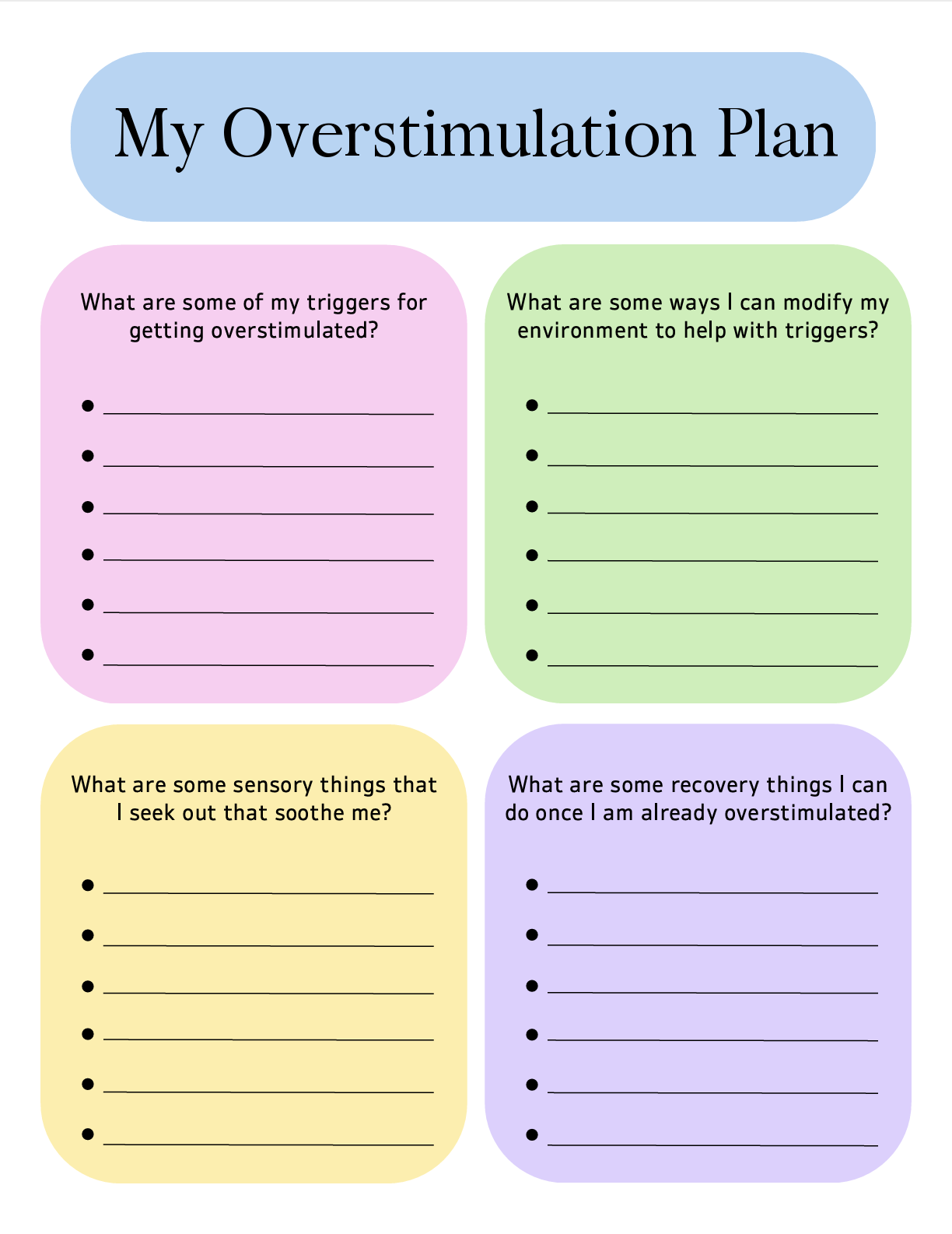
When sensory needs go unmet, the nervous system can move into survival mode. What looks or feels like “anxiety,” “irritability,” “shutdown,” or “meltdowns” can often be your nervous system being overwhelmed by sensory input or deprived of needed input.
Rather than asking, “What’s wrong with me?” a more compassionate question to ask is:
“What does my nervous system need right now?”
Honoring sensory needs can:
Reduce emotional overwhelm and burnout
Improve focus and executive functioning
Support emotional regulation
Increase a sense of safety and self-trust
Reduce shame and self-blame
This is not about “giving in” or avoiding growth. It’s about creating environments and supports that allow you to function, connect, and thrive.
Using a Sensory Checklist as a Tool for Self-Understanding
One practical, affirming tool I often recommend is a sensory checklist. A sensory checklist is not a diagnostic test; it’s a self-reflection tool that helps people notice patterns in how they experience sensory input.
A sensory checklist can help you:
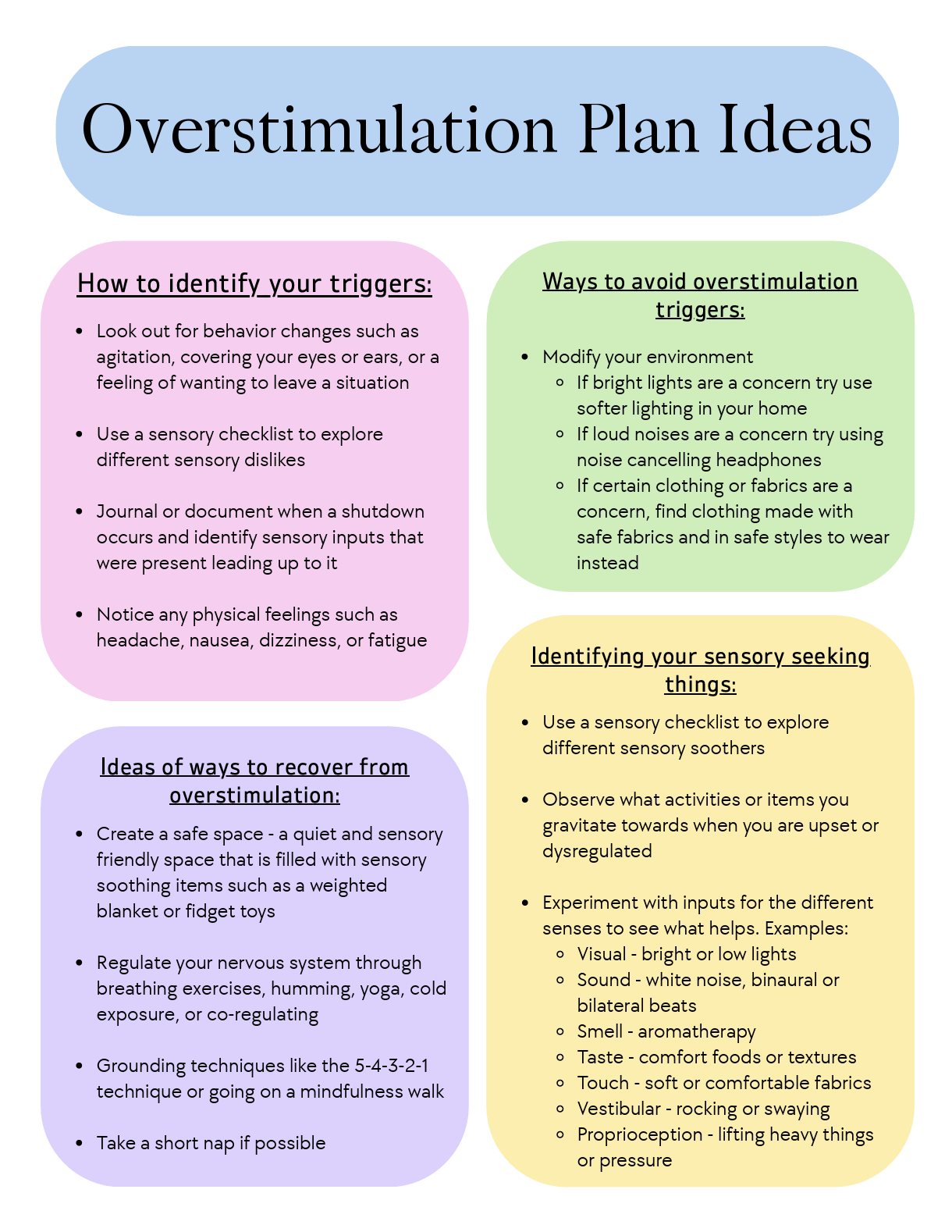
Identify which sensory inputs are soothing vs. overwhelming
Notice early signs of sensory overload
Advocate for accommodations at work, school, or home
Reduce internalized stigma by identifying real needs
Sensory Areas to Explore in a Checklist
A checklist might include reflecting on experiences related to:
Sound (ex: background noise, sudden sounds, music, silence)
Visual Input (ex: light brightness, visual clutter)
Touch (ex: clothing textures, tags, physical contact, temperature)
Smell & Taste (ex: strong scents, food textures, flavors)
Proprioception/ Movement Sense (ex: need for movement, pressure, stillness)
Interoception/ Internal Sense (ex: noticing hunger, thirst, pain, or fatigue)
For each area, you might ask:
What feels soothing or grounding?
What feels overwhelming or draining?
What helps me recover after sensory overload?
There are no “right” or “wrong” answers, only information to help you to better understand your needs.
From Awareness to Accommodation
Identifying sensory needs is not about changing yourself; it’s about changing conditions.
Accommodations can be small but impactful, such as:
Use of noise-canceling headphones
Softer lighting
Taking breaks
Adding movement into your day
Use of different sensory tools
Clear communication about needs and limits.
Accommodations are not special treatment; they are access.
A Final Word
Sensory sensitivities are not weaknesses; some nervous systems are wired to perceive the world in vivid, intense, and meaningful ways. When we stop framing sensory differences as problems and start treating them as information, we open the door to greater self-compassion, autonomy, and well-being.
You are not broken.
Your nervous system is communicating.
And your needs deserve to be honored.
Link to Emotion Recognition Worksheet